Overview
CD79B mutations significantly contribute to the pathogenesis of DLBCL by enhancing BCR signaling and promoting tumor survival. These mutations, especially when co-occurring with MYD88 mutations, define a unique molecular subtype.1 This has clinical and therapeutic implications as it may contribute sensitivity to BTK inhibitors. In an inducible mouse model of MYD88-driven DLBCL, CD79B mutations did not accelerate lymphomagenesis but demonstrated an increased sensitivity to pharmacological BTK inhibition.2 In a retrospective analysis, younger patients with MCD DLBCL that were treated with ibrutinib had significantly better outcomes.3 The most common hotspot mutation in CD79B is at the tyrosine residue 196 (Y196). This and other common mutations primarily occur in the immunoreceptor tyrosine-based activation motif (ITAM) domain and prevent the negative regulatory feedback provided by Lyn kinase thereby enhancing BCR signaling.4,5
Experimental Evidence
Driver mutations affecting this gene in DLBCL have been experimentally demonstrated to cause a gain of function (GOF).5
Clinical Relevance
CD79B is both a recurrent oncogenic signalling node in ABC-DLBCL and an ideal lineage-restricted, rapidly internalizing surface antigen. The antibody–drug conjugate polatuzumab vedotin exploits CD79B surface expression to deliver a cytotoxic payload to malignant B cells, independent of CD79B mutation status6. Polatuzumab vedotin has FDA approval for use in combination with bendamustine and a rituximab product for adult patients with relapsed or refractory diffuse large B-cell lymphoma (DLBCL), not otherwise specified, after at least two prior therapies. More recently, it was FDA approved for use with a rituximab product, cyclophosphamide, doxorubicin, and prednisone (R-CHP) for adult patients who have previously untreated diffuse large B-cell lymphoma (DLBCL), not otherwise specified (NOS), or high-grade B-cell lymphoma (HGBL) and who have an International Prognostic Index (IPI) score of 2 or greater.
Relevance tier by entity
| Entity | Tier | Description |
|---|---|---|
 |
3 | Mutations are unlikely to be relevant to BL |
 |
1 | High-confidence DLBCL gene |
 |
2 | Role of CD79B mutations in FL requires confirmation |
Mutation incidence in large patient cohorts (GAMBL reanalysis)
DLBCL
Failed to render page: conflicting chdir during another chdir block
FL
Failed to render page: conflicting chdir during another chdir block
Mutation pattern and selective pressure estimates
Failed to render page: conflicting chdir during another chdir block
CD79B Hotspots
Mutations at Y196 enhance B-cell receptor (BCR) signaling by preventing the negative regulatory feedback provided by Lyn kinase, a feedback inhibitor of BCR signaling. This results in continuous activation of the NF-κB pathway, promoting tumor cell survival and proliferation.4
| Chromosome | Coordinate (hg19) | ref>alt | HGVSp |
|---|---|---|---|
| chr17 | 62007234 | C>G | A150P |
| chr17 | 62007234 | C>T | A150T |
| chr17 | 62007233 | G>A | A150V |
| chr17 | 62007140 | A>G | L181P |
| chr17 | 62007129 | C>T | X184_splice |
| chr17 | 62006798 | T>A | Y197F |
| chr17 | 62006798 | T>C | Y197C |
| chr17 | 62006799 | A>C | Y197D |
| chr17 | 62006799 | A>G | Y197H |
| chr17 | 62006798 | T>G | Y197S |
| chr17 | 62006795 | T>C | E198G |
| chr17 | 62006680 | A>G | L200P |
| chr17 | 62006680 | A>C | L200R |
| chr17 | 62006680 | A>T | L200Q |
| chr17 | 62006603 | G>A | H226Y |
| chr17 | 62006603 | G>T | H226N |
Failed to render page: conflicting chdir during another chdir block
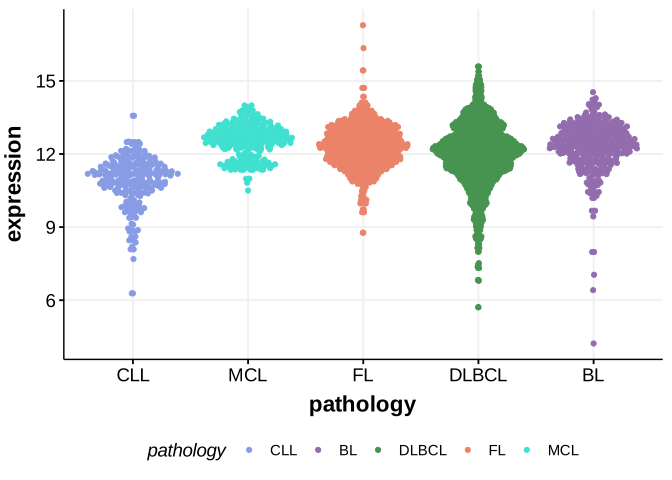
Expression
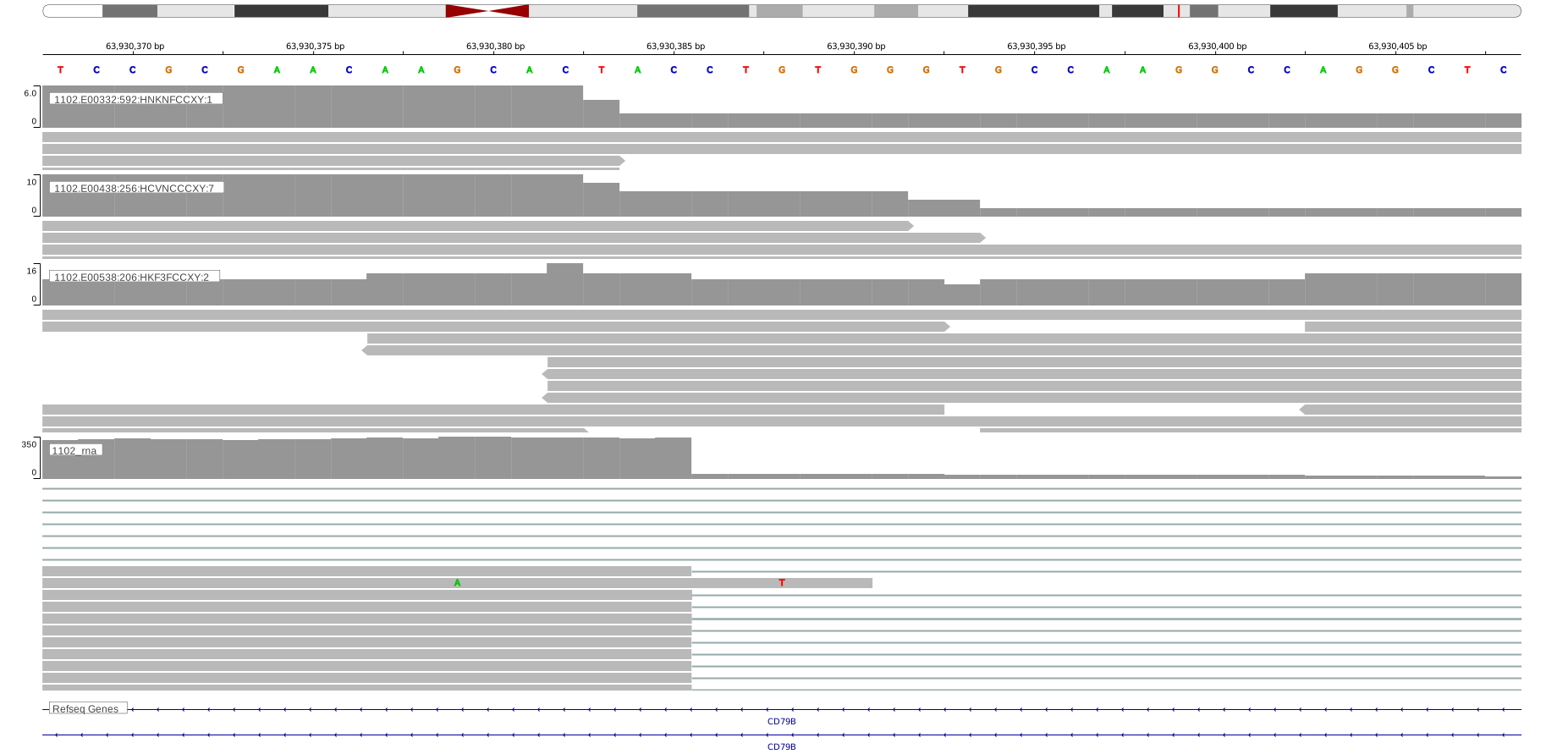
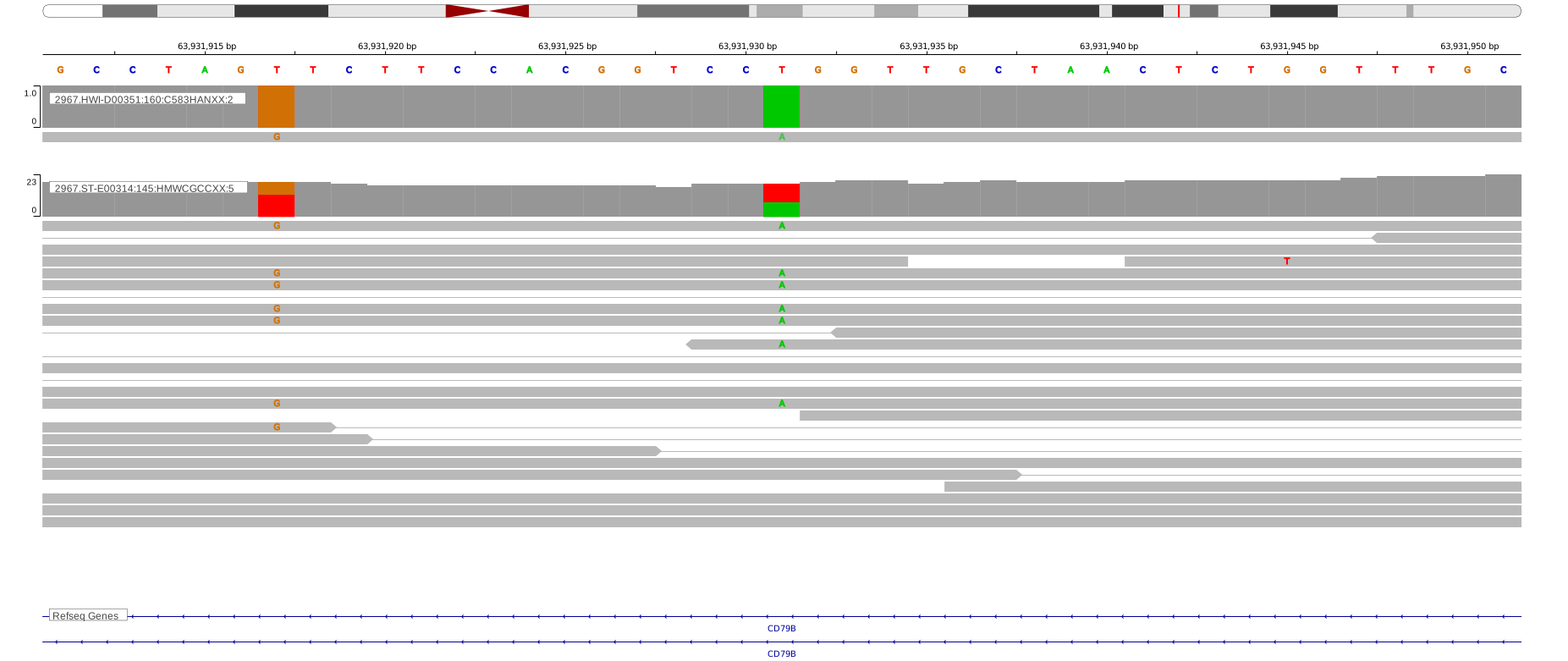
Representative Mutations
BL
 Rating ☆ ☆ ☆ ☆
☆
Rating ☆ ☆ ☆ ☆
☆
 Rating ★ ★ ★
☆ ☆
Rating ★ ★ ★
☆ ☆
Failed to render page: conflicting chdir during another chdir block