Overview
Mutations in the HLA-B gene have been associated with a loss of cell surface expression of HLA class I molecules, which are essential for presenting tumor antigens to cytotoxic T cells. This is a common mechanism of immune escape in DLBCL. Deletions of this gene are more commonly reported than HLA-B mutations. The mutation pattern in DLBCL implies the preferential accumulation of inactivating mutations. Different analytical strategies relating to the mapping of sequencing data and subtracting common germline variants can complicate the detection of mutations in this and other HLA genes. Likely owing to this, the rate of mutations is highly variable across studies and the true mutation rate has not been firmly established.
Experimental Evidence
Driver mutations affecting this gene in DLBCL have been experimentally demonstrated to cause a reduction or loss of function (LOF).1
Relevance tier by entity
| Entity | Tier | Description |
|---|---|---|
 |
1 | High-confidence DLBCL gene |
 |
2 | Role of HLA-A mutations in PMBL requires confirmation |
Mutation incidence in large patient cohorts (GAMBL reanalysis)
DLBCL
Failed to render page: conflicting chdir during another chdir block
BL
Failed to render page: conflicting chdir during another chdir block
FL
Failed to render page: conflicting chdir during another chdir block
Mutation pattern and selective pressure estimates
Failed to render page: conflicting chdir during another chdir block
HLA-A Hotspots
| Chromosome | Coordinate (hg19) | ref>alt | HGVSp |
|---|---|---|---|
| chr6 | 29910596 | T>A | F46I |
| chr6 | 29910609 | G>A | G50D |
Failed to render page: conflicting chdir during another chdir block
Expression
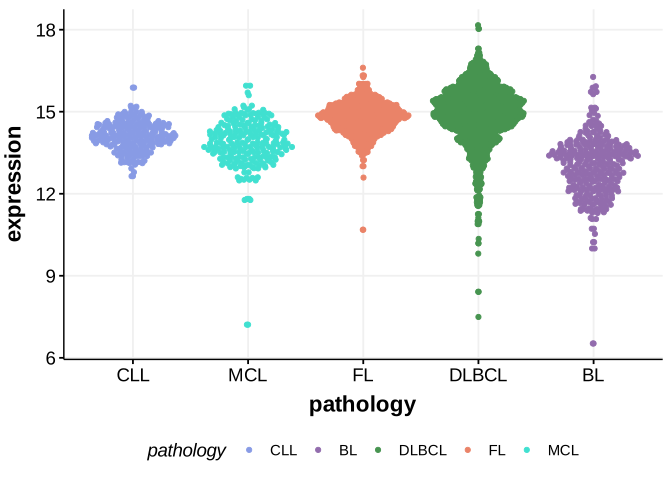
Failed to render page: conflicting chdir during another chdir block